Thyroidectomy Procedure & Recovery: What to Expect
Why Thyroid Health Matters More Than You Think
The thyroid gland plays a vital role in regulating metabolism, hormone balance, energy levels and overall well-being. In a fast-paced environment like Dubai — where stress, lifestyle changes and dietary patterns can quietly affect hormonal health — thyroid disorders are increasingly being diagnosed, especially among women. While many thyroid conditions can be managed medically, some cases require surgical intervention.
A thyroidectomy in Dubai is a safe, highly effective treatment for patients dealing with thyroid nodules, goiter, hyperthyroidism resistant to medication, or thyroid cancer. This in-depth guide walks you through everything you need to know — from diagnosis and procedure types to recovery, risks, cost, and life after surgery — so you can make an informed and confident decision.
For an overview of why patients in Dubai choose a female specialist, see our guide on choosing a female general surgeon in Dubai and our thyroid surgery service page.
Understanding the Thyroid Gland
The thyroid is a butterfly-shaped gland located at the base of your neck, just below the Adam's apple. It produces two main hormones — T3 (triiodothyronine) and T4 (thyroxine) — which together regulate:
- Metabolic rate and energy use
- Heart rate and blood pressure
- Body temperature regulation
- Energy levels and mood
- Body weight balance
- Menstrual cycle regularity
Even a small imbalance in thyroid hormone output can significantly affect daily life — and is sometimes the underlying cause of fatigue, weight changes, anxiety, or menstrual irregularities. If imaging or biopsy reveals a structural problem, your surgeon will discuss whether medical management is enough or whether thyroidectomy is the safer long-term option.
Common Thyroid Disorders Requiring Surgery
Thyroid Nodules
Solid or fluid-filled lumps. Most are benign, but suspicious or rapidly enlarging nodules may require removal for biopsy or definitive treatment.
Goiter
Generalised enlargement of the gland. Large goiters can compress the windpipe and cause breathing or swallowing difficulty.
Hyperthyroidism
An overactive gland producing excess hormone. Surgery is considered when medication or radioactive iodine therapy is unsuitable or has failed.
Thyroid Cancer
One of the most important indications for thyroidectomy. Early surgical treatment offers an excellent prognosis for most thyroid cancers.
For lump-related concerns elsewhere in the body, you may also find our guides on breast lump vs cancer and lipoma vs cyst helpful — the diagnostic principles overlap.
What Is Thyroidectomy?
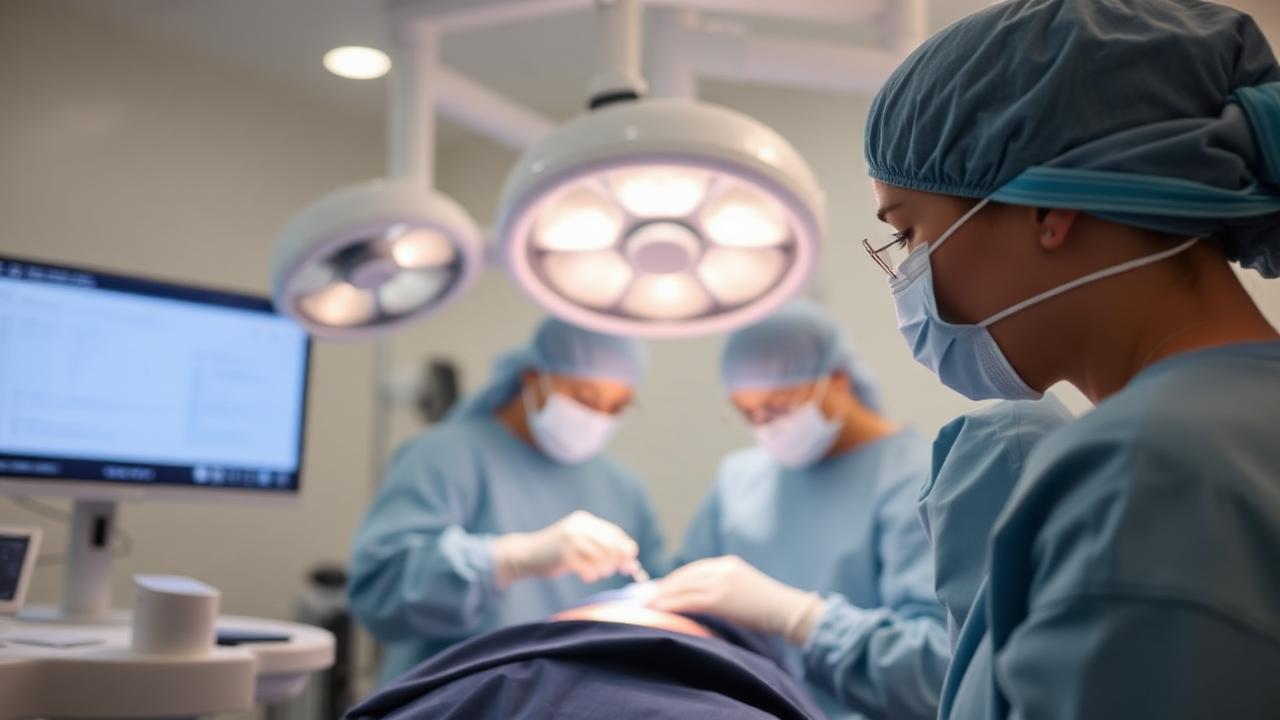
Thyroidectomy is a surgical procedure to remove part or all of the thyroid gland. It is one of the most commonly performed endocrine operations worldwide. The procedure is performed under general anaesthesia through a small horizontal incision placed in a natural skin crease at the lower neck — designed to fade and become barely visible over time.
Modern thyroidectomy in Dubai uses precise dissection techniques and intraoperative nerve monitoring to protect the recurrent laryngeal nerve (which controls the voice) and the parathyroid glands (which regulate calcium). When performed by an experienced general surgeon, complication rates are very low.
Types of Thyroidectomy Explained
Total Thyroidectomy
Removal of the entire thyroid gland. Recommended for thyroid cancer, large bilateral goiters, or severe Graves' disease. Lifelong thyroid hormone replacement is required.
Hemithyroidectomy / Lobectomy
Removal of only one lobe. Often appropriate for a single suspicious nodule confined to one side. The remaining lobe frequently produces enough hormone, sometimes avoiding the need for medication.
Subtotal Thyroidectomy
Most of the gland removed, leaving a small remnant. Less commonly performed today, occasionally used for certain hyperthyroidism cases.
Completion Thyroidectomy
Removal of the remaining lobe after a previous lobectomy — typically when biopsy after the first surgery shows malignancy.
Who Needs Thyroidectomy in Dubai?
You may be advised to consider thyroid surgery if any of the following apply:
- A biopsy (FNAC) shows suspicious or malignant cells.
- Nodules are growing rapidly or larger than 4 cm.
- A goiter is causing pressure symptoms — difficulty swallowing, breathing, or a feeling of tightness in the neck.
- Hyperthyroidism that is resistant to medication or unsuitable for radioactive iodine.
- Cosmetic concerns from a visibly enlarged gland.
- A retrosternal goiter extending behind the breastbone.
- Recurrence of thyroid disease after non-surgical treatment.
The decision is highly individual. Read our companion guide on 5 key questions to ask your surgeon before surgery to prepare for your consultation.
Pre-Surgical Evaluation
Before thyroidectomy, a thorough work-up confirms the diagnosis and ensures the recommended possible operation. Typical pre-operative assessments include:
Thyroid function tests
TSH, free T3 and free T4 to assess gland activity.
Neck ultrasound
High-resolution imaging of nodule size, structure and lymph nodes.
FNAC biopsy
Fine-needle aspiration cytology to check for malignancy.
CT or MRI
Used selectively for very large goiters or retrosternal extension.
Vocal cord assessment
Laryngoscopy to document baseline vocal cord function.
Routine pre-op tests
Blood count, kidney/liver function, ECG and anaesthetic review.
Step-by-Step Thyroidectomy Procedure
- 1
Admission & preparation
Patients are usually admitted on the day of surgery. Final consent, pre-op checks and marking are completed.
- 2
Anaesthesia
General anaesthesia is given by a specialist anaesthetist so you feel no pain during the procedure.
- 3
Surgical incision
A small horizontal incision (4–6 cm) is made in a natural neck crease for cosmetic concealment.
- 4
Dissection & gland removal
The surgeon carefully exposes and removes the thyroid lobe(s), preserving surrounding structures.
- 5
Nerve & parathyroid protection
Intraoperative nerve monitoring identifies and protects the recurrent laryngeal nerve. Parathyroid glands are preserved.
- 6
Haemostasis & closure
Energy devices control bleeding precisely. Fine subcuticular sutures are used for minimal scarring.
- 7
Recovery
You wake up in a recovery area, then move to your room for observation.
Advanced Thyroid Surgery Techniques in Dubai
Dubai hospitals offer some of the most advanced thyroid surgery technology in the region. Specialists routinely use:
- Minimally invasive thyroidectomy with reduced incision length
- Video-assisted thyroidectomy in selected cases
- Intraoperative nerve monitoring (IONM) for nerve preservation
- Advanced energy devices for bloodless precise dissection
- Cosmetic, scar-minimising closure techniques
- Enhanced recovery after surgery (ERAS) protocols
These innovations sit alongside the broader shift towards minimally invasive surgery across general surgery, where smaller incisions, less pain, and faster recovery have become the standard.
Recovery After Thyroidectomy
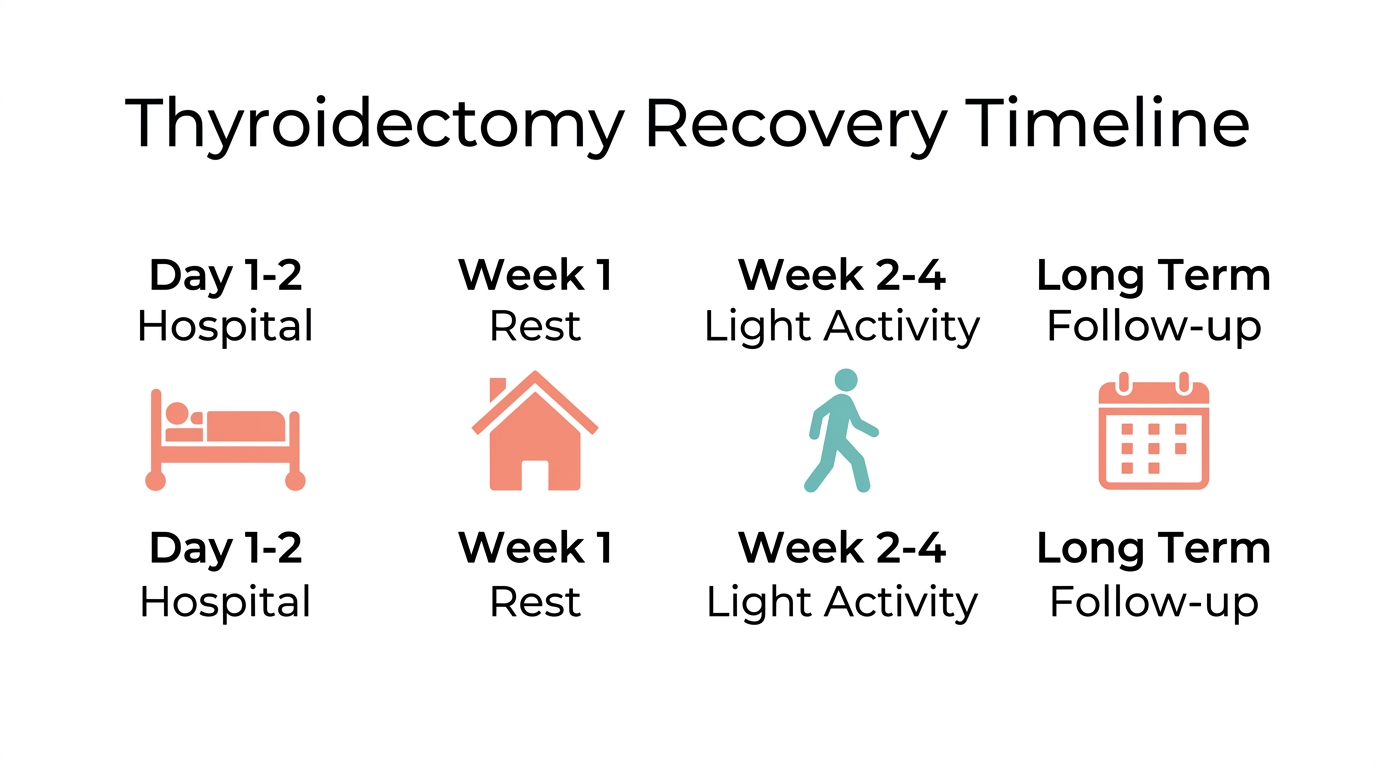
Immediate post-operative phase (Day 1–2)
Hospital stay is typically 24–48 hours. You may notice mild neck pain, throat soreness and slight swelling. Calcium levels and voice are monitored before discharge.
First week
Most patients resume light activities at home. Pain is managed with simple analgesics. A soft diet is recommended, and the wound is kept clean and dry.
Weeks 2–4
Return to office work and most normal routine. Gradual reintroduction of exercise, with avoidance of heavy lifting until cleared by your surgeon.
Long-term
If a total thyroidectomy was performed, daily thyroid hormone replacement (levothyroxine) is started and titrated through periodic blood tests. Follow-up ultrasound and TSH monitoring complete the long-term plan.
Pain, Scarring & Cosmetic Outcomes
Most patients describe post-thyroidectomy pain as mild and easily managed with standard pain relief — significantly less than they had anticipated. Scarring is minimised by careful incision placement in a natural neck crease, fine subcuticular suturing, and silicone-based scar care started a few weeks after surgery.
In experienced hands, the scar usually fades to a thin pale line that is easily covered by clothing, jewellery, or natural skin folds.
Risks and Complications
Thyroidectomy is safe, but like any operation it carries some risks. Choosing an experienced general surgeon significantly reduces these risks. Possible complications include:
Temporary voice changes
Mild hoarseness from swelling — usually resolves in days to weeks.
Hypocalcaemia
Temporary low calcium if parathyroid glands are bruised; managed with calcium and vitamin D.
Bleeding / haematoma
Uncommon but monitored carefully in the first 24 hours.
Wound infection
Rare; managed with antibiotics if it occurs.
Permanent nerve injury
Very rare in experienced hands with intraoperative nerve monitoring.
Hypothyroidism
Expected after total thyroidectomy and managed with daily levothyroxine.
Cost of Thyroidectomy in Dubai
The cost of thyroidectomy in Dubai depends on several factors:
- Hospital and facility category
- Surgeon's fees and experience level
- Type of thyroidectomy (lobectomy vs total)
- Length of hospital stay
- Anaesthesia and operating theatre charges
- Any additional procedures (e.g. lymph node dissection in cancer)
- Post-operative monitoring and pathology
Most major UAE health insurance plans cover medically necessary thyroidectomy. Always request a personalised, itemised estimate so you understand exactly what is covered. Our contact team can help with insurance pre-approval queries.
Life After Thyroid Surgery
Living without a thyroid is completely manageable. With correctly dosed thyroid hormone replacement and routine monitoring, patients return to a full, active life — including travel, exercise, pregnancy and demanding careers.
Hormone replacement therapy
A daily morning dose of levothyroxine restores normal hormone levels. Dosing is fine-tuned with periodic TSH blood tests, especially in the first 6–12 months.
Lifestyle tips
- Take levothyroxine on an empty stomach, 30–60 minutes before food.
- Maintain a balanced, protein-rich diet.
- Stay physically active — walking, yoga, swimming.
- Attend annual follow-up with thyroid blood tests.
- Carry a brief medical summary when traveling.
- Discuss medication timing if you start new supplements.
Diet After Thyroidectomy
Recommended foods
- • Lean protein — fish, chicken, lentils, eggs
- • Calcium-rich foods — dairy, leafy greens, fortified plant milks
- • Fresh fruits and vegetables
- • Whole grains and nuts
- • Adequate hydration
Foods to limit
- • Excess iodine supplements (initially, after total surgery)
- • Processed and high-sodium foods
- • Excess soy products around medication time
- • Very high-fibre meals close to levothyroxine dose
- • Alcohol in the immediate post-op period
Emotional and Psychological Recovery
Many patients feel anxious before thyroid surgery — particularly when cancer is suspected. After surgery, most report a significant improvement in confidence, sleep, energy and overall mood once hormone levels stabilise. Counselling and patient support groups are widely available in Dubai for those who need additional emotional support during recovery.
Why Choose Dr. Vanesha Varik for Thyroidectomy in Dubai?
Experience
Years of dedicated experience in endocrine and laparoscopic general surgery.
Expertise
Specialised in thyroid, breast, hernia and gallbladder procedures with a high-volume practice.
Authority
MBBS, MS, FIAGES, MRCPS[Glasg] — internationally trained and trusted across Dubai.
Trust
A patient-first, compassionate approach — particularly valued by women seeking a female surgeon.
Learn more about Dr. Vanesha's background on the about page, or read our deeper profile in Meet Dr. Vanesha Varik — female laparoscopic & general surgeon Dubai.
Real Patient Journey (Illustrative Example)
A 38-year-old female patient in Dubai presented with a slowly growing thyroid nodule on the right side. Ultrasound showed a 3.2 cm solid lesion; FNAC suggested suspicious cells (Bethesda IV).
After a detailed consultation, a right hemithyroidectomy was performed under general anaesthesia. The procedure took just under two hours, with intraoperative nerve monitoring used throughout.
She was discharged the next morning, returned to office work in week two, and was found to have a benign follicular lesion on final histology. The remaining lobe maintained normal hormone production, so no daily medication was needed. This example highlights the value of early evaluation and an experienced surgical team.
When Should You See a Thyroid Specialist?
Don't ignore neck-related symptoms. Consult a specialist if you experience:
- A new or growing lump in the neck
- Difficulty swallowing or persistent throat clearing
- A change in voice or persistent hoarseness
- Unexplained weight loss or gain
- Chronic fatigue, palpitations or anxiety
- Heat or cold intolerance and excessive sweating
- A family history of thyroid disease or cancer
Frequently Asked Questions
Related Surgical Services
Considering Thyroidectomy in Dubai?
If you have been advised thyroid surgery, or are experiencing thyroid-related symptoms, book a consultation with Dr. Vanesha Varik for expert diagnosis and safe, personalised surgical care.