5 Key Questions to Ask Your General Surgeon Before an Operation
Facing surgery can feel overwhelming — even when it's a routine procedure. Whether you're preparing for laparoscopic surgery, hernia repair, gallbladder removal, or thyroid surgery, one of the most important steps is your pre-surgical consultation.

Patients often focus only on when the surgery will happen — but rarely ask the right questions. As a board-certified female general and laparoscopic surgeon in Dubai, Dr. Vanesha Varik emphasizes that informed patients have safer outcomes, fewer complications, and faster recovery.
This comprehensive guide outlines the 5 most critical questions you must ask your surgeon before any operation, helping you make confident, well-informed decisions about your surgical care. Whether you are undergoing elective surgery or have been advised to undergo an emergency procedure, understanding your condition and treatment plan is essential for the best possible outcome.
Research consistently shows that patients who actively participate in their healthcare decisions experience less anxiety, better compliance with post-operative instructions, and improved overall satisfaction with their care. Dr. Vanesha Varik's patient-first approach ensures that every individual receives clear, honest, and detailed answers to their concerns before proceeding with any surgical intervention.
Why Asking Questions Before Surgery Is Critical
Before diving into the five essential questions, it's important to understand why this step matters so much. A pre-surgical consultation is not just a formality — it is a critical part of your treatment journey that directly impacts your safety and outcomes. Patients who take the time to understand their procedure, ask about alternatives, and discuss recovery expectations consistently report better experiences and faster healing.
In a city like Dubai, where internationally accredited healthcare facilities offer advanced surgical techniques, patients have more choices than ever. Understanding the differences between surgical approaches, the qualifications of your surgeon, and the expected recovery trajectory empowers you to make decisions that align with your health goals and lifestyle.
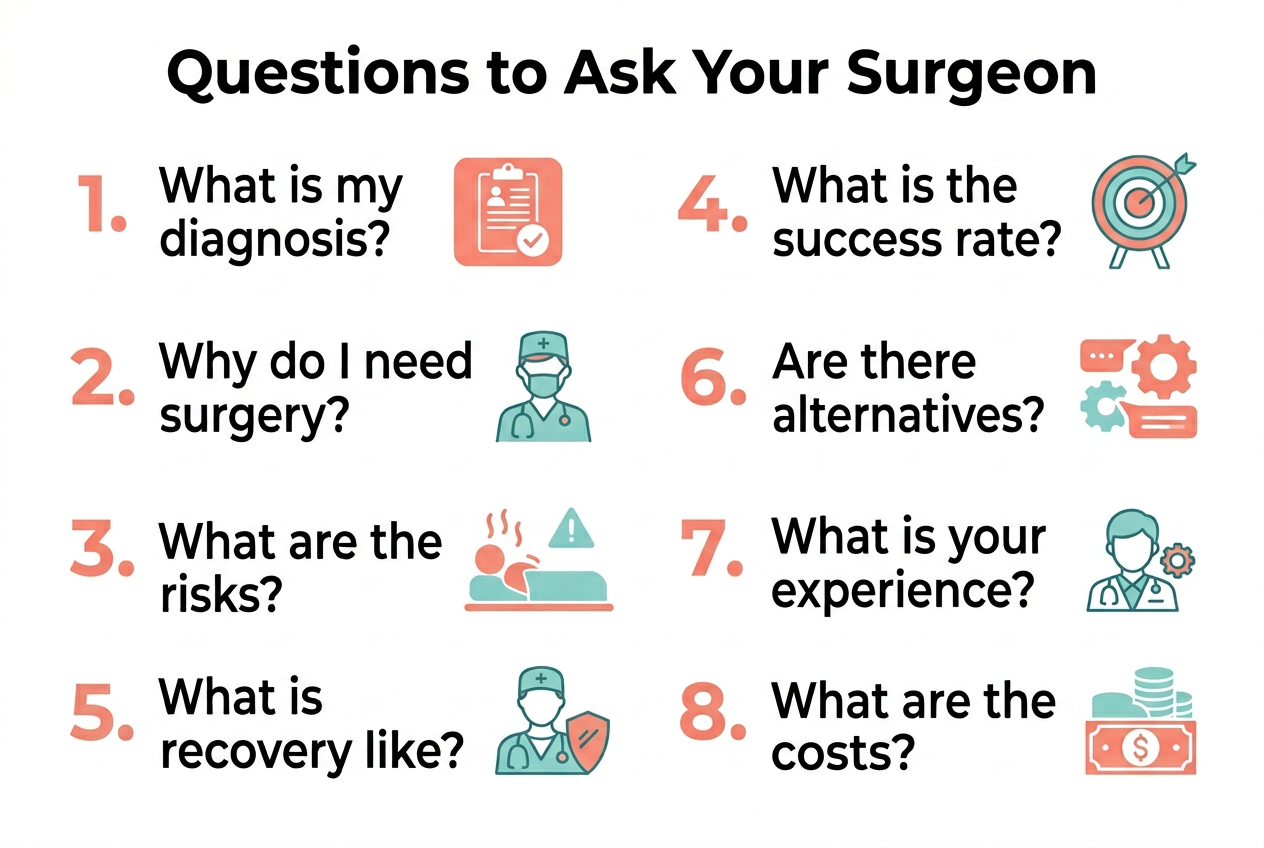
1Why Do I Need This Surgery?
The very first question you should ask your surgeon is about the medical necessity of the procedure. Understanding why surgery is being recommended — rather than simply accepting it — gives you clarity and confidence in the decision-making process.
A skilled and ethical surgeon will always take the time to explain the diagnosis in terms you can understand, the specific reason surgery is being recommended over conservative treatment, and what might happen if surgery is delayed or not performed at all.
📌 What to Ask:
- What is my exact diagnosis?
- Is surgery the only option, or are there non-surgical alternatives?
- What will happen if I choose not to have surgery?
- How urgently do I need this procedure?
Not all conditions require immediate surgery. Some can be managed with medication, lifestyle changes, or minimally invasive procedures. For example, small asymptomatic gallstones may initially be monitored, while gallstones causing repeated pain often require laparoscopic cholecystectomy. Similarly, a small reducible hernia may be watched in certain cases, whereas a strangulated hernia demands emergency hernia repair.
Understanding the urgency and necessity of your procedure helps you plan appropriately — whether that means scheduling elective surgery at a convenient time or recognizing when immediate intervention is required to prevent serious complications.
2What Type of Surgery Will Be Performed?
Understanding the surgical technique your surgeon plans to use is crucial. The type of surgery directly impacts your recovery time, pain levels, scarring, and risk of complications. In modern surgical practice, there are two primary approaches: laparoscopic (minimally invasive) surgery and traditional open surgery.
Laparoscopic surgery has revolutionized the field of general surgery. Using small incisions of just 5–12mm, a high-definition camera, and specialized instruments, surgeons can perform complex procedures with significantly less trauma to the body. This translates to faster recovery, less post-operative pain, shorter hospital stays, and better cosmetic outcomes.
📌 What to Ask:
- Will this be a laparoscopic or open surgery?
- Why is this particular method recommended for my case?
- What are the specific benefits and limitations of this approach?
- Is there a chance the procedure may need to be converted to open surgery?
As a specialist in laparoscopic surgery in Dubai, Dr. Vanesha Varik performs the majority of her procedures using minimally invasive techniques. However, she is trained in both approaches and will always recommend the method that is recommended and most effective for your specific condition.
Different surgical techniques have significant implications for your daily life during recovery. Laparoscopic patients typically return to daily activities within 3–7 days, while open surgery patients may need 2–4 weeks. For working professionals and busy families in Dubai, this difference can be a critical factor in their decision-making.
It's also important to know that in some cases, a procedure that begins laparoscopically may need to be converted to open surgery for safety reasons. This is not a complication — it is a demonstration of good surgical judgment. An experienced surgeon will explain this possibility during your consultation.
3What Are the Risks and Complications?
Every surgical procedure, no matter how routine, carries inherent risks. A transparent and experienced surgeon will clearly outline both the common risks and the rare but serious complications associated with your specific procedure. Understanding these risks is an essential part of giving truly informed consent.
While it may feel uncomfortable to discuss potential complications, this conversation is a sign of a trustworthy surgeon who prioritizes patient safety and honesty over convenience. Dr. Vanesha Varik believes that patients who understand the risks are better prepared to recognize warning signs during recovery and seek timely medical attention if needed.
📌 What to Ask:
- What are the most common risks of this surgery?
- What are rare but serious complications I should know about?
- How often do complications occur with this procedure?
- What warning signs should I watch for after surgery?
Common surgical risks include infection at the incision site, bleeding during or after the procedure, adverse reaction to anaesthesia, blood clots (deep vein thrombosis), and damage to nearby organs or structures. These risks are generally low, especially with modern surgical techniques and experienced surgeons.
For specific procedures, the risk profile varies. Gallbladder surgery risks may include bile duct injury (rare but serious), while hernia repair carries a small risk of mesh-related complications or hernia recurrence. Understanding these procedure-specific risks helps you weigh the benefits against the potential downsides.
A good surgeon will also explain how they personally mitigate these risks through their technique, experience, and post-operative monitoring protocols. This transparency builds trust and helps you feel more confident about your decision to proceed.
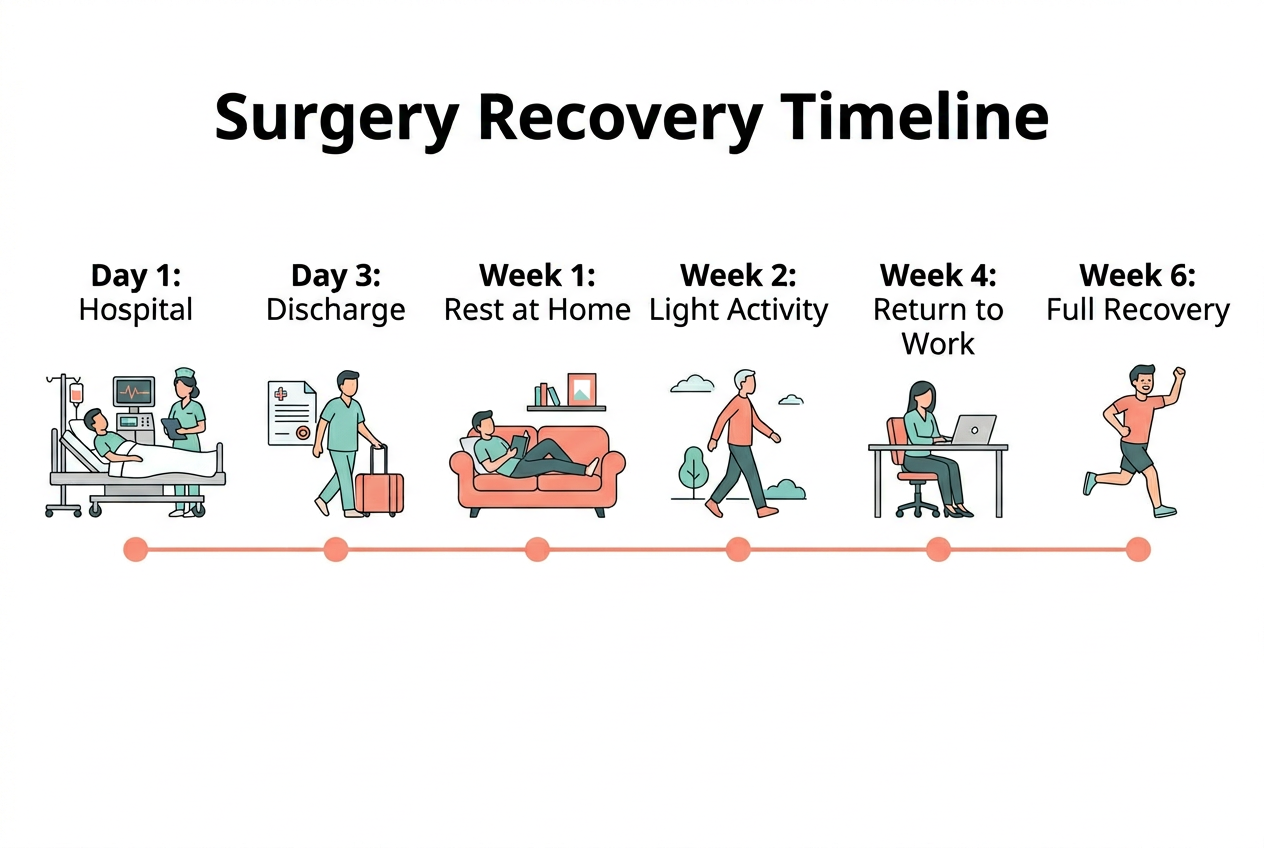
4What Should I Expect During Recovery?
Recovery planning is one of the most overlooked aspects of surgical preparation. Understanding what to expect after your procedure helps you arrange adequate support, plan time off work, and set realistic expectations for your healing journey. A well-prepared patient recovers faster and experiences less anxiety during the post-operative period.
Recovery timelines vary significantly depending on the type of surgery performed, the surgical approach used, your overall health, and your body's individual healing capacity. Dr. Vanesha Varik provides each patient with a detailed, personalized recovery plan that covers every stage — from the first hours after surgery to full return to normal activities.
📌 What to Ask:
- How long is the typical recovery period for this procedure?
- When can I return to work and resume normal activities?
- What physical restrictions should I follow and for how long?
- What diet should I follow after surgery?
- When will I need to come back for follow-up appointments?
Here is a general overview of recovery timelines for common procedures performed by Dr. Vanesha Varik:
- Laparoscopic surgery — Return to daily activities in 3–7 days; full recovery in 2–4 weeks
- Open surgery — Return to daily activities in 2–4 weeks; full recovery in 6–8 weeks
- Gallbladder removal — Most patients go home the same day or next day; resume work within 1 week
- Hernia repair — Light activities within 1 week; avoid heavy lifting for 4–6 weeks
- Appendectomy — Return to normal activities within 1–2 weeks
Post-operative dietary guidelines are particularly important after gallbladder surgery and abdominal procedures. Dr. Vanesha Varik provides comprehensive dietary advice tailored to each patient's procedure and individual needs, helping ensure a smooth and comfortable recovery.
It's also important to discuss pain management expectations. Modern surgical techniques and multimodal pain management protocols mean that post-operative pain is generally well-controlled. However, understanding what level of discomfort is normal versus what might indicate a problem is essential for a safe recovery.
5What Is Your Experience with This Procedure?
Surgeon experience is one of the most significant factors influencing surgical outcomes. Studies consistently show that surgeons who perform a high volume of a specific procedure achieve better results, lower complication rates, and shorter operating times. This question is not about questioning your surgeon's competence — it's about ensuring you receive the best possible care.
In Dubai's competitive healthcare landscape, patients have access to many qualified surgeons. Asking about experience helps you understand whether your surgeon regularly performs your specific procedure and has the depth of expertise needed for the best outcome.
📌 What to Ask:
- How many times have you performed this specific surgery?
- What is your success rate and complication rate?
- Are you specialized or fellowship-trained in this procedure?
- What hospital do you perform this surgery at?
Choosing an experienced female general surgeon in Dubai can also provide additional benefits beyond technical skill. Many patients — especially women — feel more comfortable discussing sensitive health concerns with a female surgeon, leading to better communication, more thorough consultations, and greater overall satisfaction with their care.
Dr. Vanesha Varik brings over 16 years of surgical experience with advanced qualifications including MBBS, MS in General Surgery (Gold Medal), and FIAGES (Fellowship in Laparoscopic Surgery). She has operated across a broad range of general and laparoscopic surgical procedures and is known for her precise technique, transparent communication, and patient-centered approach.
Bonus Questions You Should Also Ask
In addition to the five key questions above, here are additional important questions that can further clarify your surgical plan and help you feel fully prepared:
When Should You Schedule Your Surgery?
The timing of surgery depends on multiple factors including the nature and severity of your condition, your overall health status, and logistical considerations such as work commitments and family support. You should consider scheduling surgery when:
- Symptoms are worsening — Progressive pain, increasing frequency of attacks, or new symptoms indicate that conservative management is no longer sufficient
- Quality of life is affected — If your condition is preventing you from working, exercising, or enjoying daily activities, surgery may offer the best path to improvement
- Non-surgical treatments have failed — When medications, lifestyle changes, or other conservative approaches haven't resolved your symptoms
- Risk of complications is increasing — Some conditions become more complex and risky to treat if surgery is delayed too long
Dr. Vanesha Varik works with each patient to find the optimal timing for their procedure, balancing medical urgency with personal circumstances to ensure the best possible experience and outcome.
About Dr. Vanesha Varik
Dr. Vanesha Varik is a highly experienced Female General & Laparoscopic Surgeon in Dubai, currently practicing at Medcare Hospital. She specializes in advanced minimally invasive surgical techniques and is known for her patient-centered approach, accurate diagnosis, and ethical treatment planning.
Laparoscopic cholecystectomy for gallstones and gallbladder disease
Advanced laparoscopic and open hernia repair techniques
Thyroidectomy for nodules, goitre, and thyroid conditions
Lump removal, biopsy, and fibroadenoma excision
Emergency and elective laparoscopic appendectomy
Piles, fissure, and fistula treatment
With years of clinical expertise and advanced training in laparoscopic techniques, Dr. Vanesha Varik has built a reputation for high surgical success rates, safe outcomes, and compassionate care. She focuses on patient education — ensuring every individual fully understands their condition, treatment options, and expected outcomes before proceeding with any surgical intervention.
Explore Related Health Insights
Frequently Asked Questions
Planning Surgery in Dubai? Don't Leave Your Health to Guesswork.
Book a consultation with Dr. Vanesha Varik today and get expert diagnosis, a personalized treatment plan, and safe, advanced surgical care. Early treatment leads to faster recovery and fewer complications.