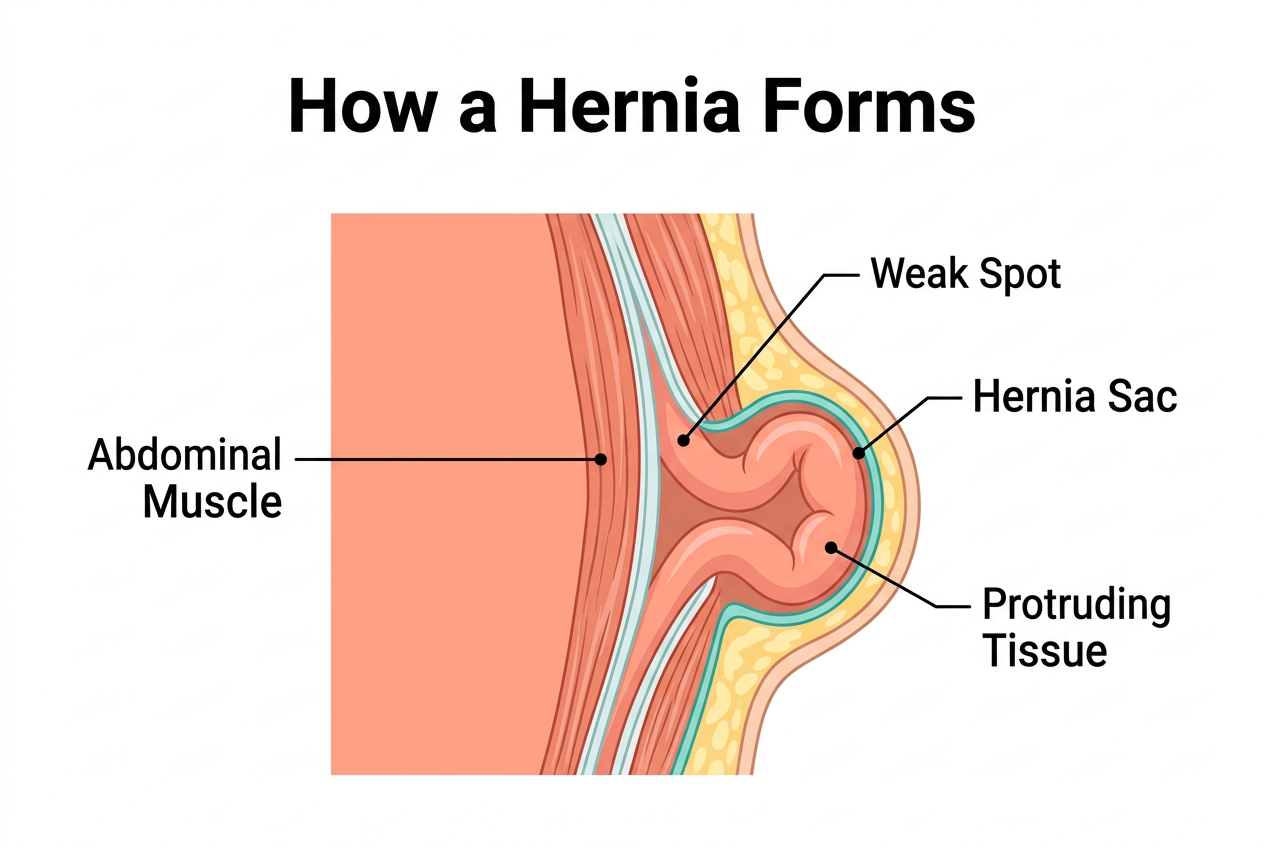
A hernia occurs when an organ or tissue pushes through a weak spot in the surrounding muscle or connective tissue of the abdominal wall. Hernias are among the most common surgical conditions affecting adults in the UAE, causing pain, swelling, or discomfort that can significantly impact daily life. Dr. Vanesha Varik, a leading laparoscopic and general surgeon in Dubai, emphasises that early diagnosis and timely treatment are essential to prevent serious complications such as incarceration or strangulation. This comprehensive guide covers the different types of hernias, their symptoms, risk factors, diagnostic methods, and the latest treatment options available in Dubai and across the UAE.
What Is a Hernia?
A hernia is a protrusion of an organ or tissue through the surrounding muscle or connective tissue that normally contains it. The abdominal wall is the most common site, but hernias can also occur in the groin, navel area, and at previous surgical incision sites. Hernias develop when there is a combination of muscle weakness and increased pressure — such as from heavy lifting, persistent coughing, or straining during bowel movements.
Common Risk Factors for Hernias in UAE Patients:
• Heavy lifting or straining — repetitive or improper lifting increases intra-abdominal pressure and weakens the abdominal wall over time
• Chronic cough — persistent coughing from smoking, allergies, or respiratory conditions creates sustained pressure on the abdominal muscles
• Obesity or weight gain — excess body weight places additional strain on the abdominal wall, increasing hernia risk significantly
• Previous abdominal surgeries — surgical incisions create potential weak points in the abdominal wall that can develop into incisional hernias
• Pregnancy — the expanding uterus stretches and weakens abdominal muscles, particularly around the umbilicus
• Chronic constipation — frequent straining during bowel movements increases intra-abdominal pressure
• Family history — genetic factors affecting connective tissue strength can predispose individuals to hernia development
Types of Hernias
1. Inguinal Hernia
Inguinal hernias are the most common type of hernia, accounting for approximately 75% of all abdominal wall hernias. They occur when tissue — usually a loop of intestine or abdominal fat — protrudes through the inguinal canal in the groin area. Inguinal hernias are significantly more common in men than women due to a natural weakness in the male groin where the spermatic cord passes through the abdominal wall. Symptoms include a visible or palpable bulge in the groin that may increase in size when standing, coughing, or straining, and may be accompanied by a dull ache or sharp pain during physical activity.
2. Femoral Hernia
Femoral hernias occur just below the inguinal ligament, in the upper inner thigh area near the femoral canal. They are more common in women than men, particularly in older or pregnant women. Femoral hernias carry a higher risk of complications — including incarceration and strangulation — compared to inguinal hernias, because the femoral canal is a narrow, rigid space. A femoral hernia may present as a small, firm lump in the groin or upper thigh that may be painful, especially when standing or straining.
3. Umbilical Hernia
Umbilical hernias occur at or near the belly button (umbilicus), where a natural weakness exists in the abdominal wall. They are very common in newborns and infants, where they often close spontaneously by age 3–4 years. In adults, umbilical hernias are more prevalent in obese individuals, women after multiple pregnancies, and patients with conditions that increase intra-abdominal pressure such as ascites (fluid accumulation in the abdomen). Adult umbilical hernias typically require surgical repair as they do not resolve on their own.
4. Incisional Hernia
Incisional hernias develop at the site of a previous abdominal surgical incision, where the muscle or fascia has weakened during the healing process. They can occur weeks, months, or even years after the original surgery. Risk factors include wound infection after the initial procedure, obesity, diabetes, smoking, and the use of corticosteroids. Symptoms include a noticeable bulge or swelling near or along a previous surgical scar that may enlarge with standing or straining and reduce when lying down.
5. Less Common Abdominal Wall Hernias
Less common abdominal wall hernias include the spigelian hernia — a defect in the lateral abdominal wall that may present without an obvious bulge — and the sports (athletic) hernia, a chronic groin injury seen in active adults from repetitive twisting and pivoting. Both are diagnosed with careful examination and imaging, and are usually repaired laparoscopically at Medcare Hospital Dubai with a recovery profile similar to inguinal repair.
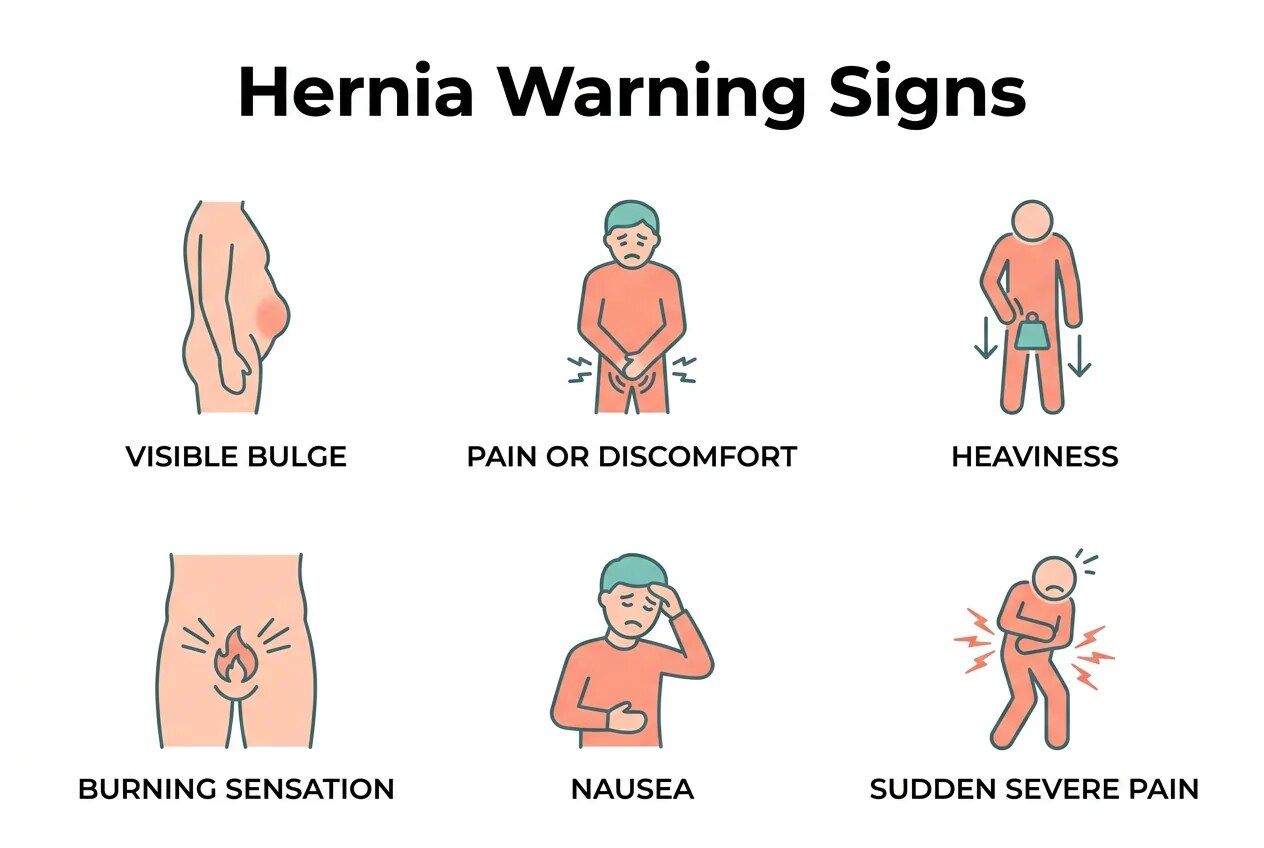
Symptoms That Require Immediate Attention
While many hernias cause mild discomfort and can be managed electively, certain symptoms indicate a potential emergency that requires urgent medical evaluation:
• Severe pain and tenderness over the hernia site — sudden, intense pain may indicate incarceration or strangulation
• Redness or discoloration of the skin overlying the hernia — suggests compromised blood supply to the herniated tissue
• Persistent nausea or vomiting — may indicate bowel obstruction caused by trapped intestine
• Bulge that cannot be pushed back — an irreducible hernia requires urgent surgical assessment
• Fever — may indicate strangulation with tissue necrosis and secondary infection
Dr. Vanesha Varik advises that any rapidly enlarging, painful, or irreducible hernia should be evaluated immediately at Medcare Hospital Dubai to prevent serious complications.
Diagnosis of Hernias
Accurate diagnosis is the first step towards effective hernia management. Dr. Vanesha Varik utilises a systematic approach to hernia evaluation:
1. Physical Examination: A thorough clinical examination by Dr. Vanesha Varik to assess the hernia's location, size, reducibility (whether it can be gently pushed back), and tenderness. The examination is performed in both lying and standing positions and may include a cough impulse test.
2. Ultrasound: A non-invasive imaging study used to visualise the hernia, identify its contents (fat, bowel, or other tissue), and assess the size of the defect in the abdominal wall. Ultrasound is particularly useful for inguinal and umbilical hernias.
3. CT Scan or MRI: Advanced imaging reserved for complex, recurrent, or occult (hidden) hernias where the diagnosis is uncertain. CT scans provide detailed cross-sectional images that help plan surgical repair, particularly for large incisional hernias or multi-compartment abdominal wall defects.
Treatment Options
Non-Surgical Management
In selected cases, small and completely asymptomatic hernias may be managed with a strategy of watchful waiting and regular monitoring. This approach is most appropriate for elderly patients with significant medical comorbidities where the surgical risk outweighs the benefit. Non-surgical management includes lifestyle modifications such as avoiding heavy lifting, maintaining a healthy weight, treating chronic cough or constipation, and wearing an abdominal support if recommended. However, it is important to understand that hernias do not resolve on their own and may enlarge over time.
Surgical Management
Surgery is the definitive treatment for hernias and is recommended for all symptomatic hernias or those at risk of complications. Two main surgical approaches are available:
• Open Hernia Repair: A traditional surgical approach where a single incision is made over the hernia site. The herniated tissue is repositioned, and the muscle defect is repaired, usually with the placement of a synthetic mesh to reinforce the weakened area and reduce recurrence risk.
• Laparoscopic Hernia Repair: A minimally invasive technique where the surgery is performed through 3–4 small incisions (each 5–10 mm) using a camera and specialised instruments. A mesh is placed behind the muscle wall to cover the defect. Laparoscopic repair offers several advantages including less post-operative pain, faster return to normal activities, smaller scars, and lower wound infection rates.
Dr. Vanesha Varik specialises in laparoscopic hernia repair, providing UAE patients with minimal downtime, excellent cosmetic outcomes, and a rapid return to their daily lives. Both primary and recurrent hernias are managed with expertise at Medcare Hospital Dubai.
Post-Surgery Recovery Tips
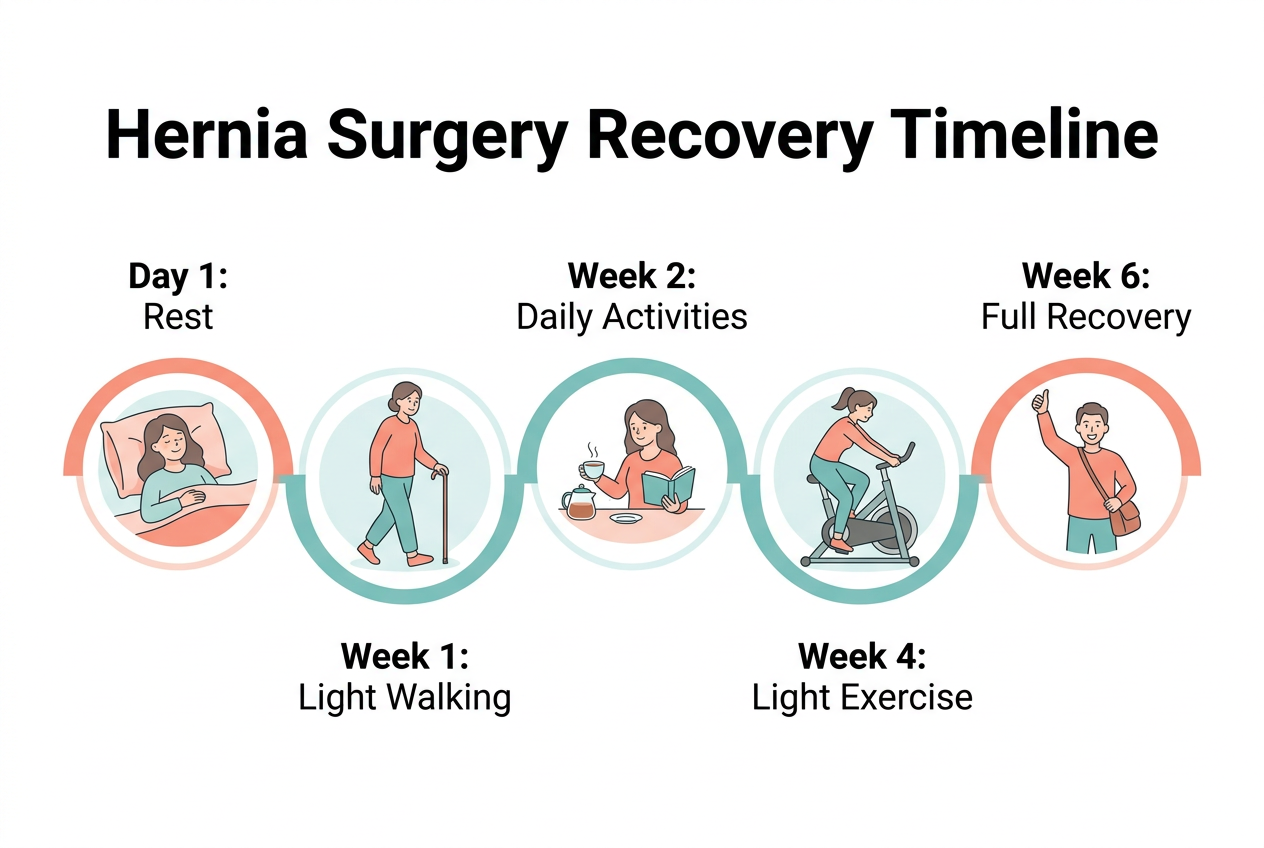
Recovery after hernia surgery depends on the type of hernia, the surgical approach used, and individual patient factors. Following Dr. Vanesha Varik's post-operative guidelines is essential for optimal healing and to minimise the risk of hernia recurrence:
• Days 1–2: Resume gentle walking and light activity. Short walks promote blood circulation and help prevent post-operative complications such as deep vein thrombosis.
• Weeks 1–2: Most patients can return to desk-based work or light duties. Avoid lifting anything heavier than 5 kg.
• Weeks 4–6: Gradually resume more strenuous activities, exercise, and heavy lifting as directed by Dr. Vanesha Varik.
• Diet: Follow a balanced, high-fibre diet to prevent constipation and avoid straining during bowel movements. Stay well-hydrated.
• Follow-up: Attend all scheduled follow-up appointments with Dr. Vanesha Varik at Medcare Hospital Dubai to monitor healing and address any concerns.
Prevention Tips
While not all hernias can be prevented — particularly those caused by congenital weakness or genetic predisposition — the following measures can significantly reduce the risk of developing a hernia:
• Maintain a healthy weight — excess weight places continuous strain on the abdominal wall muscles
• Use proper lifting techniques — always bend at the knees and lift with your legs, not your back or abdomen
• Treat chronic cough or constipation — persistent coughing and straining significantly increase intra-abdominal pressure
• Strengthen core muscles — regular, appropriate exercise helps maintain abdominal wall integrity
• Post-surgical wound care — follow all post-operative instructions carefully to prevent incisional hernias after abdominal surgery
• Stop smoking — smoking impairs wound healing and increases the risk of hernia recurrence
Conclusion
Hernias can affect anyone — men, women, and children — but timely evaluation and appropriate surgical intervention prevent serious complications and restore quality of life. Whether you are experiencing a new bulge, persistent groin pain, or have been diagnosed with a hernia, expert care is essential. UAE patients are advised to consult Dr. Vanesha Varik, a specialist in both laparoscopic and open hernia repair, for comprehensive evaluation and optimal surgical outcomes at Medcare Hospital Dubai.