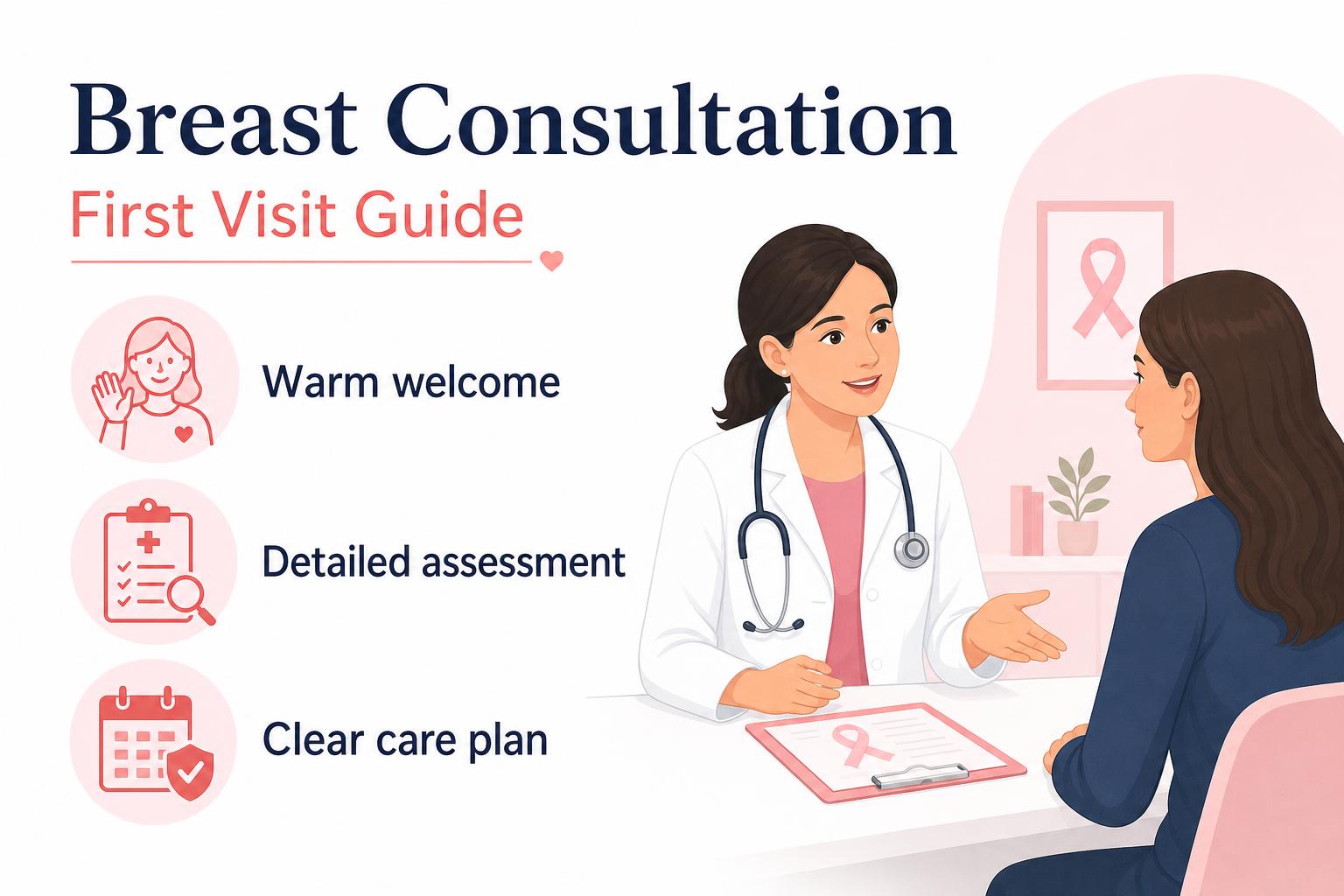
Breast health is a vital aspect of a woman's overall well-being, yet it is often surrounded by confusion and hesitation. One of the most common questions women face is: "My breast symptom needs looking at — what will actually happen at the consultation?"
Uncertainty can delay diagnosis and treatment, which is critical — especially in conditions like breast lumps, infections, or early signs of breast cancer. Knowing what a specialist assessment involves can make a significant difference in outcomes, peace of mind, and timely care.
Dr. Vanesha Varik, a female general surgeon in Dubai, provides breast evaluation at Medcare Hospital. This guide will help you understand:
- What a breast consultation involves, step by step
- Which symptoms need specialist evaluation
- How the triple assessment works
- Why early evaluation is important
- What happens after the results
Understanding Breast Health
Breast conditions can range from completely benign (non-cancerous) to serious and life-threatening. Many women experience symptoms at some point in their lives that require professional evaluation. Understanding what is normal and what needs medical attention is the first step towards proactive breast care.
Common breast symptoms that women experience include:
- Breast pain (mastalgia) — cyclical or non-cyclical
- Lumps or thickened tissue — new or changing
- Nipple discharge — clear, milky, or bloody
- Skin changes — dimpling, redness, or peau d'orange
- Swelling or asymmetry — sudden or progressive
While not all symptoms indicate a serious problem, they should never be ignored. Early evaluation is the key to ruling out serious conditions and ensuring timely treatment if required. Breast tissue is influenced by hormones, age, lifestyle, and genetics. Changes during menstruation, pregnancy, or menopause are common — but distinguishing normal physiological changes from abnormal pathology requires expert assessment by a qualified specialist.
Role of a Female General Surgeon in Breast Care
A female general surgeon — especially one experienced in breast surgery — is the most appropriate specialist for diagnosing and treating breast conditions that require further evaluation or intervention. General surgeons receive extensive training in breast disease management during their surgical residency and fellowship programmes.
What a Female General Surgeon Does:
- Detailed clinical breast examination with systematic assessment
- Definitive diagnosis of breast lumps using triple assessment
- Imaging coordination — mammogram, ultrasound, MRI
- Biopsy procedures — fine needle aspiration (FNAC) and core biopsy
- Surgical treatment for both benign and malignant conditions
- Management of breast infections, abscesses, and mastitis
- Post-surgical follow-up and long-term breast health monitoring
In particular, consulting a female general surgeon in Dubai provides an added layer of comfort and privacy for many patients, which is particularly valuable when discussing sensitive breast health concerns.
Key Insight: If you have any persistent breast symptom — a lump, pain, discharge, or skin change — a general surgeon is the correct specialist to consult for definitive evaluation and treatment.
When Should You Consult a Female General Surgeon?
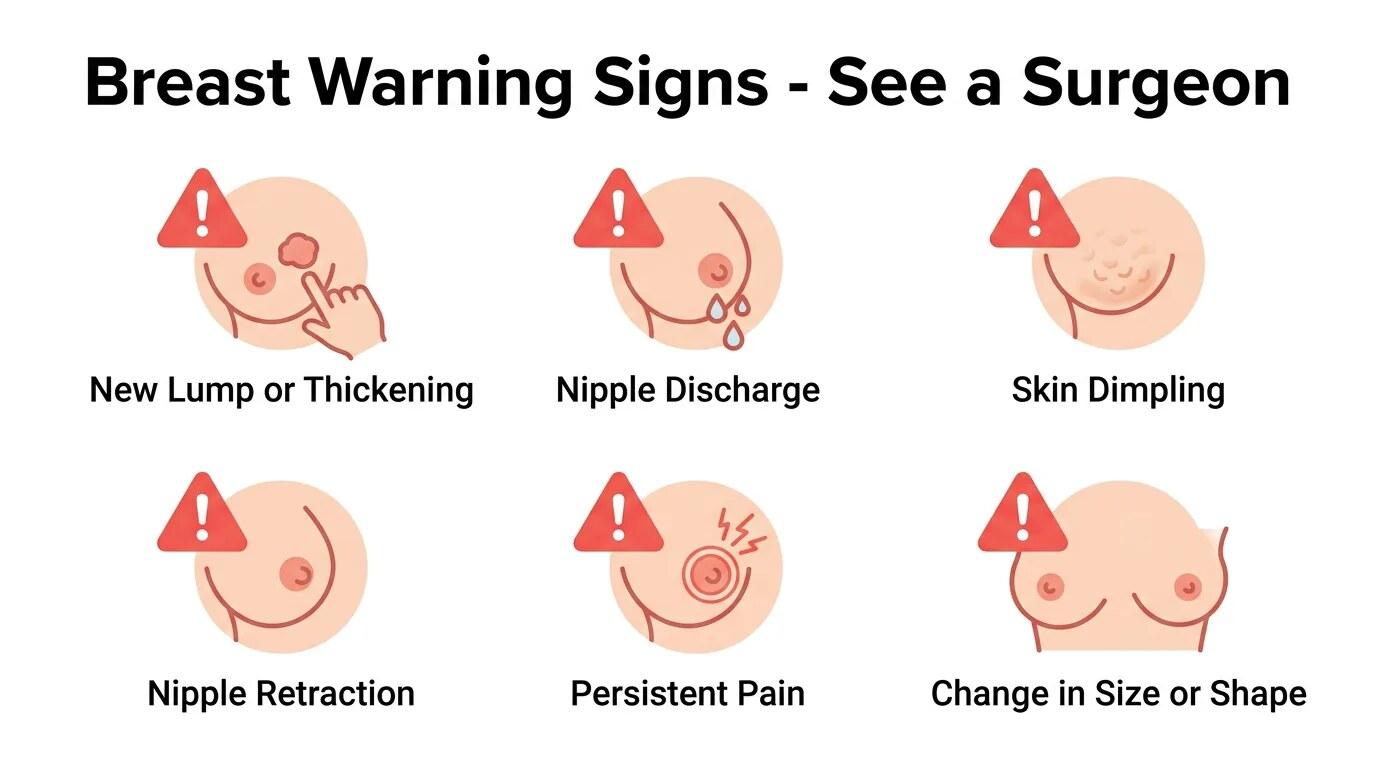
You should consult a general surgeon immediately if you experience any of the following symptoms:
- A breast lump — new, growing, or changing in character
- Persistent breast pain — lasting more than 2–3 weeks, especially if localised
- Nipple discharge — especially if bloody, brown, or spontaneous
- Skin changes — dimpling, redness, thickening, or peau d'orange appearance
- Breast swelling or asymmetry — sudden onset or progressive
- Family history of breast cancer — especially in first-degree relatives
- Nipple retraction or inversion — new onset
Early consultation with the right specialist ensures accurate diagnosis, timely treatment, and significantly better outcomes. Don't let confusion about which doctor to see delay your breast health evaluation.
Why Early Diagnosis Is Critical
Breast cancer is one of the most common cancers among women worldwide, including in the UAE. However, when detected early (Stage I or II), five-year survival is high. This statistic underscores the critical importance of timely screening and evaluation.
Delaying consultation due to confusion about which specialist to see, or due to fear and anxiety, can lead to disease progression. Many benign conditions also require timely management to prevent complications — for example, an untreated breast abscess can lead to chronic infection, and a growing fibroadenoma may require more extensive surgery if left unchecked.
Early evaluation by the right specialist provides reassurance — even when the condition turns out to be benign and non-serious. The peace of mind that comes from a definitive diagnosis is invaluable.
Importance of Choosing a Female Surgeon
For many women, discussing breast health can be deeply personal and sensitive. Consulting a female general surgeon offers several advantages:
- Greater comfort during physical examination
- Better communication — women often feel more at ease discussing symptoms openly
- Reduced hesitation — leading to earlier consultation and evaluation
- Increased trust — fostering a stronger doctor-patient relationship
- Cultural sensitivity — particularly important in the UAE and Gulf region
This is especially important in regions where cultural and personal comfort play a significant role in healthcare decisions. Dr. Vanesha Varik understands these concerns and provides a compassionate, private, and professional environment for all breast consultations.
Breast Conditions Commonly Treated by General Surgeons
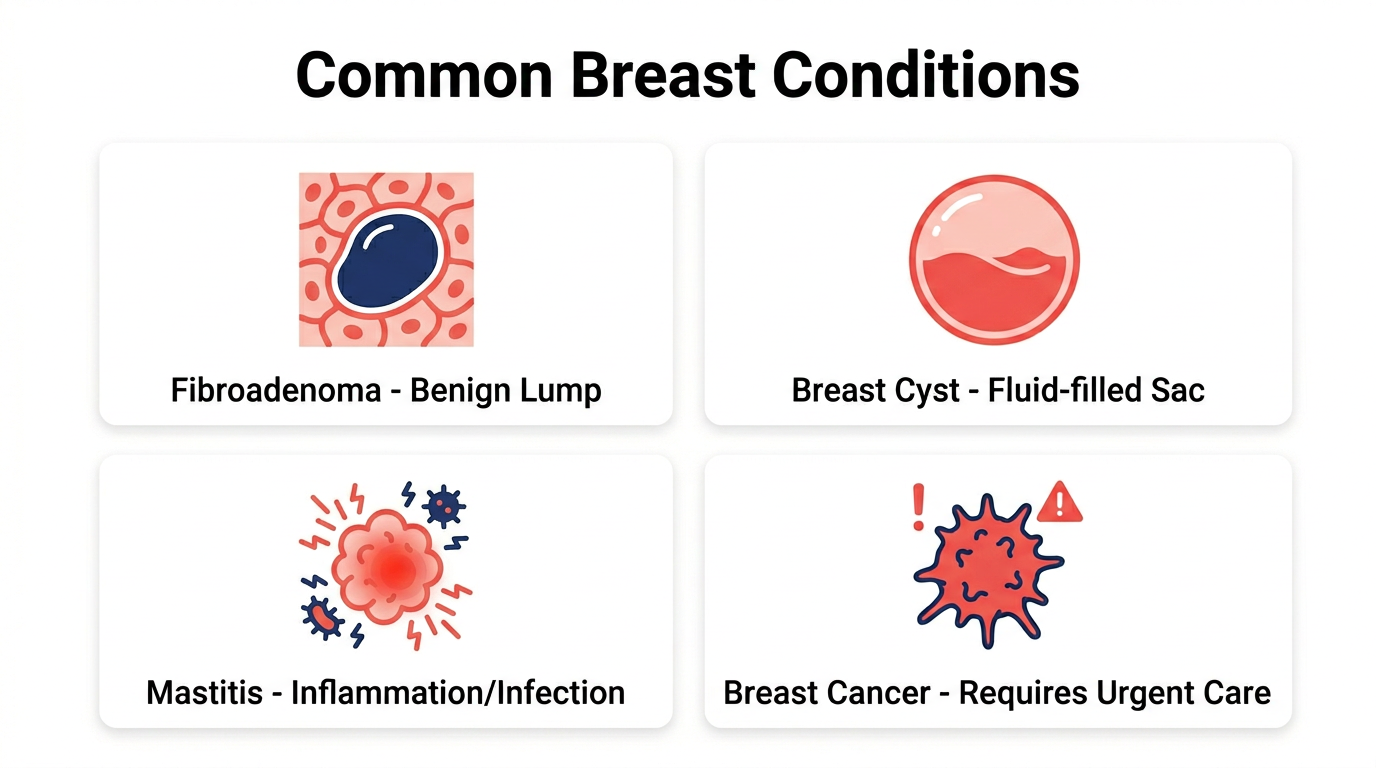
A female general surgeon manages a comprehensive range of breast conditions, spanning from simple benign lumps to complex malignant diseases:
Benign Conditions
- Fibroadenoma — solid, benign, movable breast lump common in young women
- Breast cysts — fluid-filled sacs that may cause pain or tenderness
- Mastitis — breast inflammation, often occurring during breastfeeding
- Breast abscess — infected collection requiring drainage
- Fat necrosis — firm lump caused by trauma to fatty tissue
Malignant Conditions
- Breast cancer — invasive ductal, lobular, and other subtypes
- Pre-cancerous lesions — ductal carcinoma in situ (DCIS), lobular carcinoma in situ (LCIS)
- Phyllodes tumour — rare breast tumour requiring surgical excision
Other Breast Issues
- Nipple discharge evaluation — investigation of pathological discharge
- Nipple abnormalities — inversion, eczema, Paget's disease
- Breast pain evaluation — non-hormonal or persistent mastalgia
Diagnostic Process for Breast Conditions
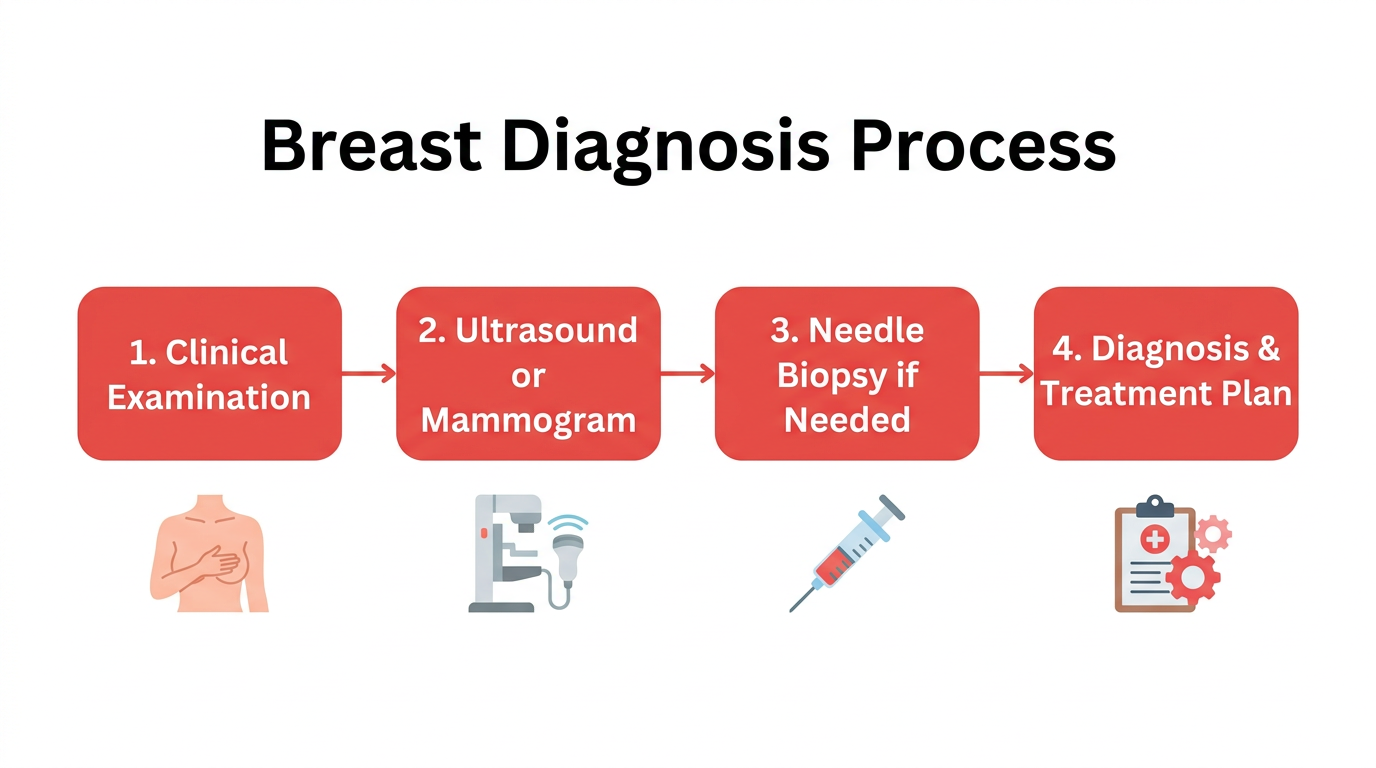
A structured diagnostic approach — known as the triple assessment — is the gold standard used by breast surgeons worldwide. This systematic method ensures no condition is missed and treatment is tailored to each patient's specific needs:
- Clinical examination — thorough assessment of lump size, shape, mobility, consistency, and tenderness by an experienced surgeon
- Imaging — ultrasound (preferred for women under 40) or mammography (standard for women over 40), with MRI for complex cases
- Tissue sampling — fine needle aspiration cytology (FNAC) or core biopsy if any abnormality is identified
- Treatment planning — personalised management based on diagnosis, patient preferences, and clinical factors
This comprehensive approach — coordinated by Dr. Vanesha Varik — ensures that every breast condition receives accurate diagnosis and evidence-based treatment planning.
Why Choose a Female General Surgeon in Dubai?
Dubai offers internationally accredited healthcare facilities with international accreditation, and choosing the right specialist significantly enhances your treatment experience and outcomes. Benefits of consulting a female general surgeon in Dubai include:
- Advanced diagnostic technology — digital mammography, high-resolution ultrasound, and MRI
- International treatment standards — evidence-based protocols matching global best practices
- Personalised care — tailored treatment plans considering individual patient needs and preferences
- Multidisciplinary approach — seamless collaboration with oncologists, radiologists, and pathologists
- Privacy and comfort — female surgeon consultations for sensitive breast concerns
Dr. Vanesha Varik, a skilled female general surgeon at Medcare Hospital Dubai, ensures that every patient receives both clinical expertise and compassionate, empathetic care throughout their breast health journey.
Prevention & Breast Health Awareness
While not all breast conditions can be prevented, proactive steps can significantly improve early detection and outcomes:
- Monthly breast self-examination — from age 20 onwards
- Annual clinical breast examination — by a qualified specialist
- Regular mammography — from age 40 (or earlier with family history)
- Maintain a healthy weight — obesity increases breast cancer risk
- Limit alcohol consumption — associated with increased breast cancer risk
- Report any new or changing symptoms promptly — early evaluation saves lives
Remember: early detection through regular screening and prompt consultation with the right specialist is the most powerful tool in managing breast health. Don't delay — your health is worth the consultation.
Conclusion
When it comes to breast health, knowing what a specialist assessment involves is the first step towards proactive care. A female general surgeon carries out the breast evaluation, diagnosis, biopsy and surgical treatment described in this guide.
Dr. Vanesha Varik, a trusted female general surgeon in Dubai, combines clinical expertise with compassionate care to ensure every woman receives accurate diagnosis, timely treatment, and complete peace of mind for all breast health concerns.